

Sample Collection & Preservation:
The Complete Norgen Biotek Guide
Most labs choose an extraction kit carefully and a collection tube almost by accident. It’s an understandable order to think in, because extraction is the bit that happens at the bench where you can see it going wrong. But by the time a degraded sample reaches the column, there is nothing a kit can do to recover what’s already been lost.
Nucleases keep working after collection, bacteria in a stool or saliva sample keep growing, and cell-free DNA in a blood tube gets swamped by genomic DNA released from lysing white cells. The usual answer is a cold chain, which works but is expensive, awkward to run across multiple sites, and fails silently when a courier leaves a box on a loading bay. Ambient-temperature preservatives solve this differently, stabilising nucleic acids at the point of collection so the sample can travel by ordinary post and still give you clean material weeks or months later. The trade-off is that the preservative chemistry and the extraction chemistry need to match, which is why it’s worth choosing both together.
1. Collect & preserve
Stabilise nucleic acids at the point of collection, at ambient temperature.
2. Purify & isolate
Extract with a kit validated against that specific preservative.
3. Downstream
PCR, qPCR, sequencing, microarrays, 16S profiling.
What follows walks through the range by sample type. Each section covers what makes that sample awkward, the collection devices available, and the isolation kit that should follow.
General and Multi-Sample Collection
If you’re running a study that takes several sample types, or you don’t yet know what you’ll be collecting, a device tied to one specimen is the wrong place to start. Norgen’s Total Nucleic Acid Preservation Tubes take any swab-collected specimen, whether that’s nasal, buccal, saliva, faecal, skin or a surface, and preserve both DNA and RNA in the same tube.
The preservative stops Gram-negative and Gram-positive bacterial growth, halts fungal growth, and inactivates viruses, so what arrives at the lab is non-infectious and safe to handle. DNA holds for over four months at room temperature and RNA for over two months. You supply your own sterile flocked swab, which keeps the per-sample cost down and lets you standardise on whatever swab your protocol already uses.
Collect with

Total Nucleic Acid Preservation Tubes
Liquid preservative for any swab-collected specimen. DNA stable over 4 months, RNA over 2 months at room temperature.
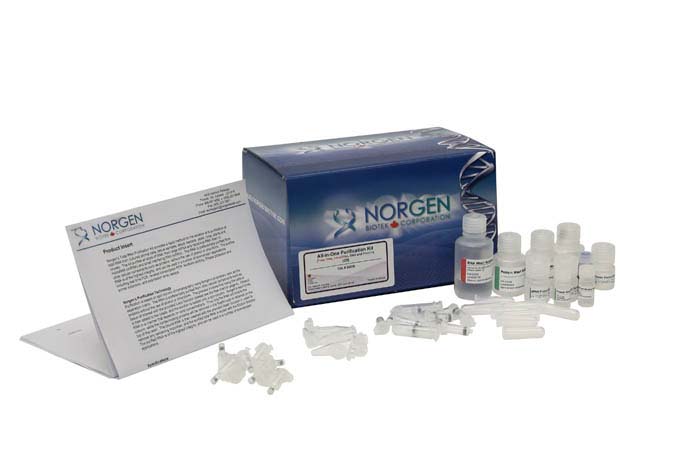
Because these tubes preserve both analytes, the kit you reach for afterwards depends on what your question needs rather than what the tube allows. For RNA alone, the Total RNA Purification Kit is the workhorse and the one Norgen’s own supplementary protocol for these tubes is written against. If you want RNA and genomic DNA from the same preserved sample, the RNA/DNA Purification Kit splits them across two columns without dividing the sample first, which matters when the specimen is small or hard to obtain.
Then extract with

Total RNA Purification Kit
Silicon carbide chemistry, no phenol step. Binds all RNA sizes down to microRNA without GC bias.
RNA/DNA Purification Kit
Sequential isolation of total RNA and genomic DNA from a single sample. Two-column system, no sample splitting.
Swab-Based Collection
Swabs are the least invasive way to sample a person, an animal or an environment, which is exactly why they end up in studies with large participant numbers and long transport times. The catch with microbiome work in particular is that whatever grows fastest in transit dominates the profile you eventually sequence, so a swab left unpreserved doesn’t just lose material, it gives you a misleading answer.
The Swab Collection and DNA Preservation Kit stabilises the microbiota profile from the moment of collection. Swabs come individually wrapped and sterile, so the whole thing works as a self-contained kit you can post out to participants.
Collect with

Swab Collection and DNA Preservation Kit
Individually wrapped sterile swabs. Stabilises microbiota profiles at the point of collection for ambient storage and transport.
Which kit follows depends on what you’re after. For community profiling where you want host and microbial DNA together, the Microbiome DNA Isolation Kit runs a universal protocol that recovers both simultaneously and is validated against these preserved swabs. If your interest is purely bacterial, the Bacterial Genomic DNA Isolation Kit handles both Gram-positive and Gram-negative organisms. And where the swab is host tissue rather than microbial, the general Genomic DNA Isolation Kit covers animal tissue, cells, bodily fluids and swabs.
Then extract with

Microbiome DNA Isolation Kit
Isolates host and microbial DNA simultaneously from fresh, frozen or preserved swabs.

Bacterial Genomic DNA Isolation Kit
Spin column preparation for both Gram-positive and Gram-negative bacteria.

Genomic DNA Isolation Kit
General purpose: animal tissues, cultured cells, bodily fluids, viruses and swabs.
Phage DNA Isolation Kit
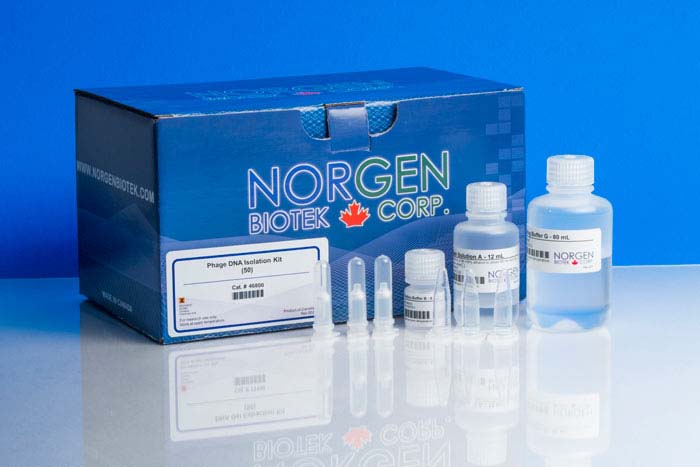
Total DNA from a broad spectrum of bacteriophages propagated in liquid culture. No phenol, chloroform or caesium chloride banding.

Saliva/Swab RNA Purification Kit
Total RNA including viral and bacterial RNA, from swabs preserved in Total Nucleic Acid Preservation Tubes. No phenol or chloroform.
Cell-Free DNA and RNA From Blood
Liquid biopsy is unforgiving about collection. The cell-free fraction you want is a vanishingly small proportion of the total nucleic acid in a blood tube, and the white cells sitting alongside it are full of genomic DNA. As those cells lyse or undergo apoptosis, they flood the plasma with background that swamps your signal. Draw into a plain EDTA tube and leave it overnight and the ratio has already moved against you.
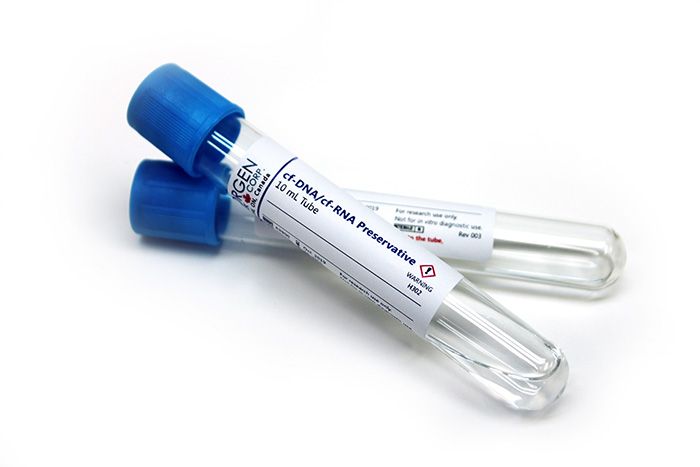
Norgen’s cf-DNA/cf-RNA Preservative Tubes address this with a fixative-free preservative that prevents apoptosis and haemolysis without cross-linking the DNA. That last point matters more than it sounds: cross-linking fixatives stabilise a sample at the cost of making it harder to amplify afterwards. Cell-free DNA and circulating tumour DNA hold for 30 days at ambient temperature, and for up to eight days at 37°C, which covers a summer courier delay. Cell-free RNA holds for 30 days, and circulating tumour cells for 14.
There’s a practical benefit too. Because the tubes prevent haemolysis, plasma separates cleanly and you don’t lose volume in transit. In Norgen’s shipping study, tubes returned after 72 hours in transit still yielded 6 to 7 mL of plasma, where competitor and EDTA tubes dropped from around 4 mL to around 2.5 mL over the same journey.
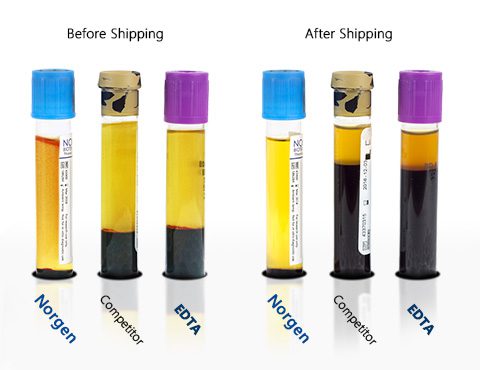
Figure 1: No plasma volume loss after shipping. Blood drawn from 6 donors in duplicate, one set shipped overnight (72 h round trip). Norgen tubes retained 6–7 mL of recoverable plasma; competitor and EDTA tubes dropped from ~4 mL to ~2.5 mL over the same journey.
Collect with
cf-DNA/cf-RNA Preservative Tubes
Both cf-DNA and cf-RNA preserved from a single tube. Fixative-free, no cross-linking. 30 days ambient for cf-DNA/ct-DNA and cf-RNA, 14 days for CTCs.
Downstream, the leukocytes recovered from these tubes are themselves a useful source of genomic DNA, and the Blood DNA Isolation Kit handles that on a magnetic bead system that scales to automation if you need it. If you’re working with unpreserved whole blood, dried blood spots, or blood already collected into Tempus or PAXgene RNA tubes, there’s a matched kit for each of those too, alongside a broader range of plasma/serum kits for both routine and cell-free work.
Blood DNA

Blood DNA Isolation Kit (Magnetic Bead System)
Genomic DNA from up to 200 µL whole blood on a magnetic bead system. Also available in 96-well format for high throughput.
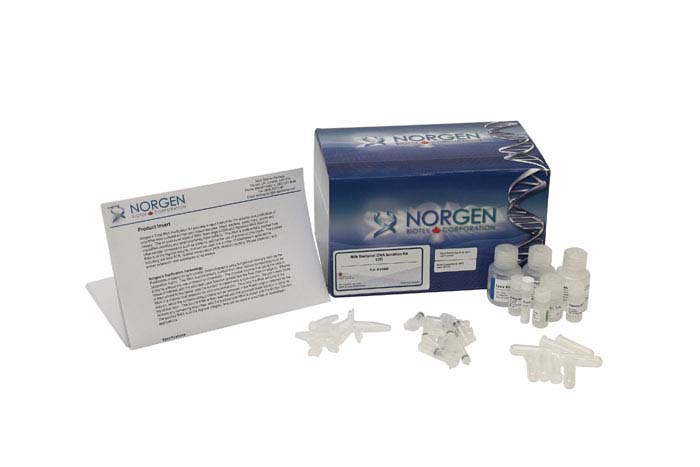
Blood Genomic DNA Isolation Kit
Spin column kit scaled from micro to maxi input volumes. Recovers genomic, mitochondrial, viral and bacterial DNA from blood.
Blood RNA

Preserved Blood RNA Purification Kit I
For use with Tempus™ blood RNA tubes. Total RNA including microRNA, without phenol or chloroform.

Preserved Blood RNA Purification Kit II
For use with PAXgene™ blood RNA tubes. Total RNA including microRNA, without phenol or chloroform.
For the cell-free fraction itself, several matched kits cover plasma and serum, sized to input volume from micro through maxi. The two combined kits below are worth a look if you want DNA and RNA (or DNA, RNA and viral nucleic acid) from a single small-volume sample rather than running separate extractions.
Plasma/Serum DNA
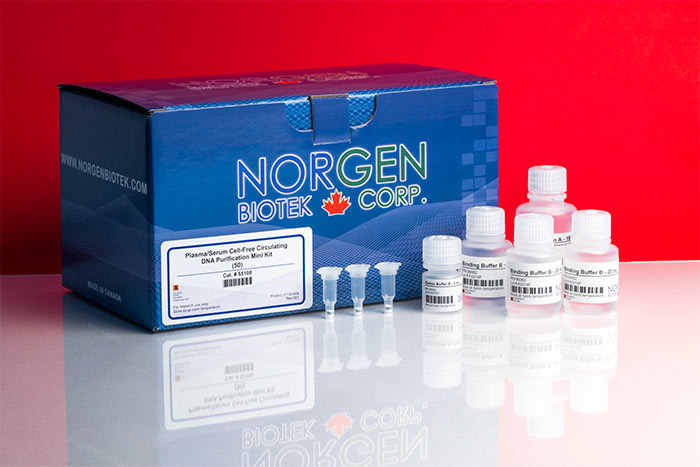
Plasma/Serum Cell-Free Circulating DNA Purification Kit
Spin column kit for cfc-DNA from plasma or serum, scaled from micro to maxi input volumes.
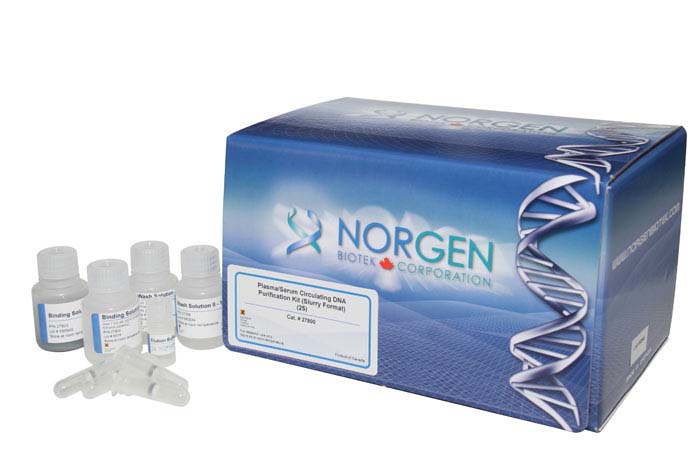
Plasma/Serum Circulating DNA Isolation Kit (Slurry Format)
Slurry format needs no extension tubes for larger volumes. Also isolates viral and bacterial DNA from plasma/serum.
Plasma/Serum RNA
Plasma/Serum RNA Purification Kit
Circulating and exosomal RNA from plasma or serum, scaled from mini to maxi input volumes.
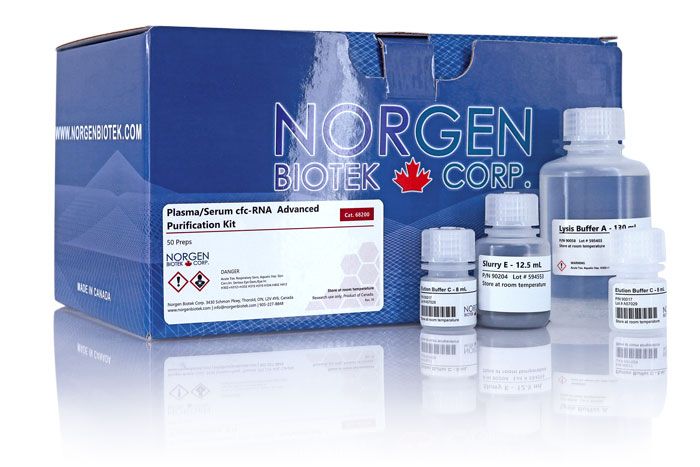
Plasma/Serum cfc-RNA Advanced Purification Kit
Higher input range (1–6 mL) with minimal DNA contamination. Compatible with fresh, preserved or frozen samples.
Plasma/Serum combined DNA + RNA

Plasma/Serum RNA/DNA Purification Kit
Sequential isolation of circulating RNA, exosomal RNA and cfc-DNA from the same small-volume sample (10–200 µL).
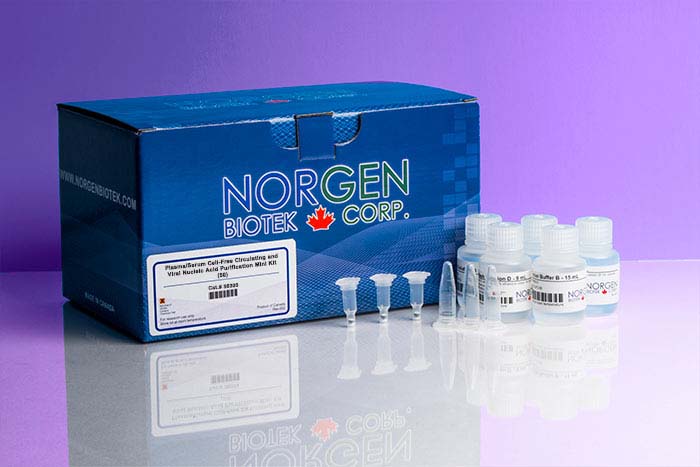
Plasma/Serum Cell-Free Circulating & Viral Nucleic Acid Purification Kit
cfc-DNA, circulating and exosomal RNA, and viral DNA/RNA in a single elution from one sample.
Saliva
Saliva is the sample type that fixes recruitment problems. Blood draws need a phlebotomist and a clinic visit, and they deter exactly the participants you most want to keep in a longitudinal study: children, older adults, and anyone a long way from your site. A saliva device can go out in the post and come back the same way.
Which device you choose comes down to scale and format. The EZCollect devices are sold singly and are the simplest thing to hand to a participant: spit into the funnel to the fill line, twist the lid to release the preservative, shake for 15 seconds. The preservative lives in the cap and is only released once the tube is sealed, so the participant never touches it. Saliva DNA collected this way stays stable for up to six years at room temperature.
For larger studies, the 50-device Collection and Preservation Kits work the same way with an ampoule format, and each collection tube carries a unique serial number for anonymous sample tracking, which tends to matter for epidemiological and population work. Preserved saliva DNA holds beyond two years at ambient temperature and preserved saliva RNA for up to two months. Both preservatives inactivate bacteria, yeast and viruses on mixing.

1. Spit
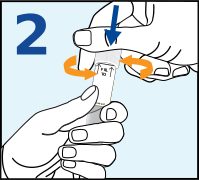
2. Twist
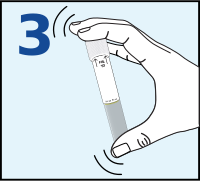
3. Mix

4. Ready
The EZCollect four-step workflow: collect, twist, shake, transport.
Collect with

EZCollect Saliva DNA Device
Single-unit device for at-home collection. Saliva DNA stable up to 6 years at room temperature.

EZCollect Saliva RNA Collection Device
Same four-step workflow for RNA. Saliva RNA stable up to 2 months at room temperature.

Saliva DNA Collection and Preservation Devices
Serial-numbered tubes for population studies. DNA stable beyond 2 years at ambient temperature.

Saliva RNA Collection and Preservation Devices
Preservative inactivates bacteria, yeast and viruses. RNA stable up to 2 months at room temperature.
On the extraction side, the Saliva/Swab RNA Purification Kit is written specifically for preserved saliva from the RNA devices and for swabs preserved in Total Nucleic Acid Preservation Tubes, and there’s a 96-well version when volumes justify it. For DNA, the Saliva DNA Isolation Kit is the matched partner to the preservation devices and also handles fresh saliva.
Then extract with
Saliva/Swab RNA Purification Kit
Total RNA including viral and bacterial RNA, from fresh or preserved saliva and nasal/throat swabs. No phenol or chloroform.
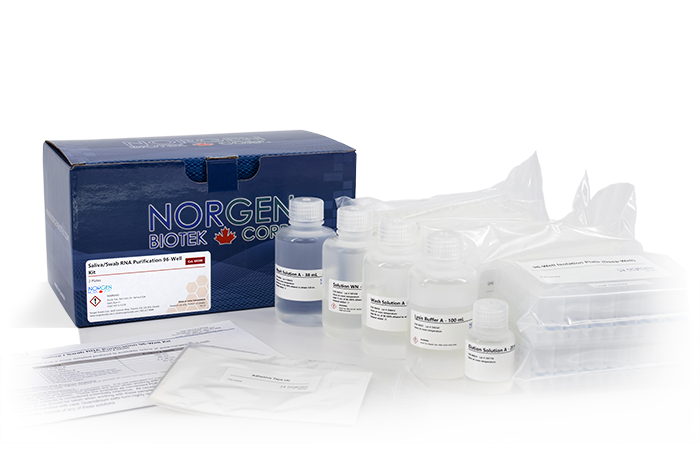
Saliva/Swab RNA Purification 96-Well Kit
High-throughput plate format with consistent well-to-well recovery.

Saliva DNA Isolation Kit
Matched to the Saliva DNA Collection and Preservation Devices. Also compatible with fresh saliva.
Worth knowing if exosomes are your target: Norgen also offers a Saliva Exosome Collection and Preservation Kit (Norgen Cat. 65400) that stabilises exosomes for two years at ambient temperature, which pairs with the Saliva Exosome Purification Kit and then the Exosomal RNA Isolation Kit for the RNA cargo. Ask us for details.
Urine
Urine is the most convenient sample a participant can give and one of the most fragile once given. It’s a hospitable environment for bacterial overgrowth, and the exfoliated cells and cell-free material you’re usually interested in degrade quickly at room temperature. Refrigerate it and you’ve solved the problem for a sample collected on site, but not for one collected at home.
Norgen’s Urine Preservative handles this at ambient temperature, holding RNA, microRNA, DNA and proteins for more than two years. It comes two ways. The dried format sits as a pellet in the collection tube, so the participant simply passes urine into the tube and mixes gently until the orange pellet dissolves. The single-dose liquid ampoule is the more flexible option: collect between 5 and 50 mL into any container, add the ampoule contents, mix. Importantly, the preservative is compatible with most DNA, total RNA, microRNA and protein isolation methods, so it doesn’t lock you into a particular downstream route.
Collect with

Urine Collection and Preservation Tube, 50 cc
Dried preservative in the tube, suitable for 5 to 45 mL of urine. Nucleic acids and proteins preserved beyond 2 years at room temperature.

Urine Preservative Single Dose
Liquid ampoule format. Add to 5 to 50 mL of urine collected into any container.

Urine Preservative Single Dose
Same preservative, single-unit format for pilot work or small sample numbers.
Urine is a rich source of extracellular vesicles, so if exosomal RNA is the target the Exosomal RNA Isolation Kit follows exosome purification and recovers all sizes of vesicle RNA including microRNA, without ultracentrifugation or phenol. Beyond exosomes, Norgen also offers dedicated kits for genomic DNA, cell-free circulating DNA and RNA, and exfoliated cell nucleic acids, each with its own format range.
Urine DNA
Genomic DNA Isolation Kit
General-purpose genomic DNA from bodily fluids, cells and tissues, including urine.

Urine DNA Isolation Kit
Urine-specific spin column kit recovering both high molecular weight and short circulating DNA fragments from up to 1.75 mL.

Urine (Exfoliated Cell) DNA Purification Kit
Human genomic DNA from exfoliated urinary tract cells, or bacterial genomic DNA from urine, from 1–50 mL.

Urine Cell-Free Circulating DNA Purification Kit
Cell-free circulating and viral DNA from fresh, preserved or frozen urine, 250 µL to 2 mL.
Urine RNA

Exosomal RNA Isolation Kit
All sizes of extracellular vesicle RNA including microRNA. Flexible elution from 50 to 100 µL. No special instrumentation required.

Urine Total RNA Purification Kit (Slurry Format)
All sizes of RNA including microRNA from 5–10 mL urine, slurry format needs no extension tubes.

Urine (Exfoliated Cell) RNA Purification Kit
Total RNA including microRNA from exfoliated urinary tract cells, without phenol or chloroform.

Urine Cell-Free Circulating RNA Purification Kit
Cell-free circulating RNA including exosomal and viral RNA from fresh, preserved or frozen urine.
Stool and Faecal Samples
Stool is the hardest sample type in this list to get right, and the one where collection method has the biggest effect on the answer. Three things work against you at once. The sample is heterogeneous, so two scoops from the same specimen can give different profiles. Bacterial composition shifts fast at ambient temperature, with fast growers taking over. And stool is loaded with humic acids and other PCR inhibitors that carry through a careless extraction.
Norgen’s stool preservative addresses the first two together. It homogenises the sample, which removes the variability between subsamples, and it halts microbial growth so the profile you sequence resembles what was there at collection. In a published comparison of twelve collection and storage methods, samples preserved this way were the closest to frozen stool over a 14-day period. DNA holds for over two years at room temperature and RNA for seven days. The preservative also eliminates odour and renders the sample non-infectious, which is not a trivial consideration when participants are posting samples back to you.
Format is the main choice. The all-in-one System is the one to send to participants, as each clamshell contains nitrile gloves, alcohol swabs, Fe-Col collection paper and the preservative tube. The Tubes on their own are the economical option for lab or clinic collection. The Mini Tubes come pre-loaded with beads for bead beating and suit small animal work. The Faecal Swab format handles thin or loose samples, infant samples, and various mammals where a scoop isn’t practical.

Figure 1: Norgen’s best-in-class preservation. Community shift towards the reference over a 14-day storage period, compared against 11 other sample collection and storage methods. Norgen is the closest match to frozen stool samples.
Collect with

Stool Nucleic Acid Collection and Preservation System
Complete clamshell with gloves, alcohol swabs, Fe-Col collection paper and preservative tube. Built for at-home collection.

Stool Nucleic Acid Collection and Preservation Tubes, 20 mL
Preservative tube with integrated scoop. DNA over 2 years and RNA 7 days at room temperature.

Faecal DNA Collection and Preservation Mini Tubes
Pre-loaded beads for homogenisation by bead beating. Compatible with commercial bead beating systems.

Faecal Swab Collection and Preservation System
Swab format for thin stool, infant samples and small mammals. Optimised for the Microbiome DNA Isolation Kit.
Extraction is where the inhibitor problem gets solved. All of the stool kits below combine bead tubes with a chemistry that strips humic acids out, so what reaches your PCR is clean. Choose by analyte: DNA alone on a magnetic bead system that scales to automation, DNA on spin columns, both DNA and RNA together, or a swab-specific microbiome protocol.
Then extract with

Stool DNA Isolation Kit (Magnetic Bead System)
Fast and reproducible from preserved, fresh or frozen stool. 96-well format available for robotic automation.

Stool DNA Isolation Kit
Spin column format recovering bacterial and host DNA together, molecular weights up to 50 kb plus.

Stool Nucleic Acid Isolation Kit
Total DNA and RNA from the same sample, host and microbial together.
Microbiome DNA Isolation Kit
The matched partner to the Faecal Swab Collection and Preservation System.
A Note on Why the RNA Kits Are Superior
Most extraction kits use silica columns, and silica binds RNA with an affinity that varies by fragment length and GC content. The practical consequence is that small RNA species, microRNA in particular, bind less efficiently and are underrepresented in what you elute. You don’t see this as a failure. You see it as a slightly lower yield and a microRNA fraction that looks thinner than it should.
Norgen’s kits use silicon carbide instead, which binds all RNA species with uniform affinity regardless of molecular weight or GC content. In side-by-side gels against the major silica-based kits, the small RNA band that’s largely absent from competitor lanes is clearly present in the Norgen lane. There’s no phenol step and no carrier RNA needed, which matters when you’re going on to small RNA sequencing and a carrier would confound the library.

The “missing RNA” comparison gel. Unlike silica columns, silicon-carbide technology exhibits uniform binding affinity for all RNA species, regardless of molecular weight or GC content, ensuring the full diversity of small and microRNA is captured.