

Xylene Substitute for Histology: The Complete Histo-Clear Range Guide
Safer clearing and mounting for histology, without compromising on staining quality or tissue morphology.
In this guide, you’ll learn:
- Why xylene remains a persistent safety concern in histology labs, and what a clearing agent actually does.
- The difference between Histo-Clear and Histo-Clear II, and which suits manual versus automated processing.
- How Omnimount pairs with either clearing agent for long-term slide preservation.
Why Clearing Agent Choice Still Matters
Clearing is the step in tissue processing where water is removed and the tissue is made transparent, so that paraffin wax can infiltrate it fully. Xylene has done this job for decades, and it’s still common on the bench, but it’s also a well-documented health hazard. A good xylene substitute for histology needs to do more than avoid that risk: it needs to protect your sections and your staining quality too.
Xylene has another quieter cost too: it tends to harden and embrittle tissue, which makes thin sectioning harder and shortens the life of your microtome blades.
Working with xylene
Toxic and carcinogenic with chronic exposure. Hardens and embrittles tissue, risking micro-cracks. Noxious, lingering chemical odour in the lab.
Working with Histo-Clear
Non-toxic, non-carcinogenic, and biodegradable. Keeps tissue flexible for cleaner thin sectioning. Natural, food-grade citrus fragrance.
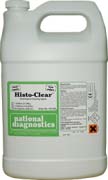
Histo-Clear: The Original Xylene Substitute
Histo-Clear is distilled from food-grade essential oils and works as a direct, drop-in substitute for xylene, fully compatible with alcohol, paraffin, and standard mounting media, so it fits into an existing manual processing protocol without any changes.
Beyond the safety improvement, it genuinely changes how the tissue behaves under the blade. Because it leaves sections less hard and brittle than xylene, thin cutting becomes easier and microtome blades last longer. Comparative studies in immunohistochemistry have also found that Histo-Clear preserves antigenicity well, often giving brighter nuclear staining and clearer cytoplasmic detail than xylene-processed controls, with acidophilic stains and Harris’ Hematoxylin and Eosin standing out particularly well.
User safety
Non-toxic, non-carcinogenic, and biodegradable, significantly reducing the health risks of chronic xylene exposure.
Superior morphology
Avoids the hardening and embrittlement xylene causes, preventing micro-cracks and keeping sections intact.
Seamless compatibility
A drop-in replacement for manual processing and staining workflows, with no protocol changes needed.
Histo-Clear II: Built for Automated Processing
Histo-Clear II carries the same non-toxic, fully biodegradable profile as the original, with a substantially reduced citrus odour, which matters more once you’re running larger batches through an automated processor rather than clearing slides by hand.
It’s a long-standing favourite for dry mounting and aqueous mounting procedures. If you’re planning wet-mounting with a synthetic medium, it’s worth confirming compatibility with your specific mounting media first.
Low odour
A greatly reduced citrus scent compared with other citrus-based clearing agents, including the original Histo-Clear.
Non-toxic and biodegradable
The same safety profile as Histo-Clear, which also helps reduce disposal costs.
Dry and aqueous mounting
A long-standing choice for these procedures. Check compatibility before wet-mounting with synthetic media.
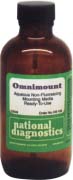
Omnimount: The Universal Mounting Partner
Clearing is only half the story. Once your slide is stained and coverslipped, the mounting medium is what determines whether it still looks right in five years, or in fifty. Omnimount was specifically developed for compatibility with Histo-Clear II, though it’s genuinely universal, working equally well with xylene, toluene, limonene, and petroleum-derived clearing agents.
It combines strong optical clarity with low fluorescence, which matters if you’re doing any fluorescence work alongside routine histology, and it has a higher flash point and lower toxicity than xylene-based mountants, making it a safer product to store and handle.

Figure 1: Long-term preservation performance. Micrograph of a tissue section successfully preserved in Omnimount. The medium maintains structural integrity and optical brilliance even after years of storage, demonstrating its resistance to oxidative degradation and UV-induced yellowing.
Build a Complete Clearing and Mounting Workflow
Histo-Clear II and Omnimount were designed as a pair, so choosing them together removes the guesswork on compatibility, whether you’re processing manually or on an automated line.
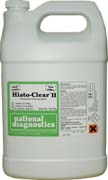
Histo-Clear II
Low-odour clearing built for automated processors and high sample throughput.
Move Your Lab Away from Xylene
Safer for your staff, kinder to your sections, and built to slot straight into your existing histology workflow. Not sure which combination suits your processor or protocol? Get in touch and we’ll help you choose.