


Homologous Recombination Assay Kit: Rapid qPCR-Based Efficiency Quantification
Homologous recombination is a critical cellular process, and measuring its efficiency is essential for understanding DNA repair mechanisms, gene targeting, and genetic stability. Traditional methods of assessing recombination efficiency often rely on labour-intensive protein expression and staining techniques, which limit scalability and extend experimental timelines. The Homologous Recombination Assay Kit provides a rapid, robust, and highly sensitive solution for precisely quantifying recombination events in both bacterial and mammalian cells, eliminating the bottleneck of phenotypic screening.
The assay leverages a co-transformation strategy using two distinct plasmids (dl-1 and dl-2), each containing different defective mutations in the lacZα coding region. When these plasmids are co-transfected into a host cell, intermolecular homologous recombination can generate a functional lacZα cassette. Recombination efficiency is then accurately quantified using qPCR, facilitated by the provided assay and universal primer mixtures designed to amplify only the recombined product. This PCR-based approach significantly enhances sensitivity and streamlines the workflow, making it ideal for high-throughput screening applications.
Key Benefits:
- Rapid and Sensitive Quantification: PCR-based precision. Utilises qPCR to deliver highly sensitive and quantitative measurement of homologous recombination events, eliminating the need for slow, traditional staining methods.
- Broad Compatibility: For multiple cell types. Optimised for evaluating recombination efficiency in both prokaryotic (bacterial) and eukaryotic (mammalian) cell models, offering versatile experimental applications.
- Comprehensive Kit: All essential primers included. Comes complete with specific assay primers and universal primer mixtures, ensuring targeted amplification of only the successful homologous recombination product.
- High-Throughput Ready: Streamline your screening. The efficient qPCR-based protocol is perfectly suited for high-throughput genetic screening, saving valuable laboratory time and resources.
Technical Insights
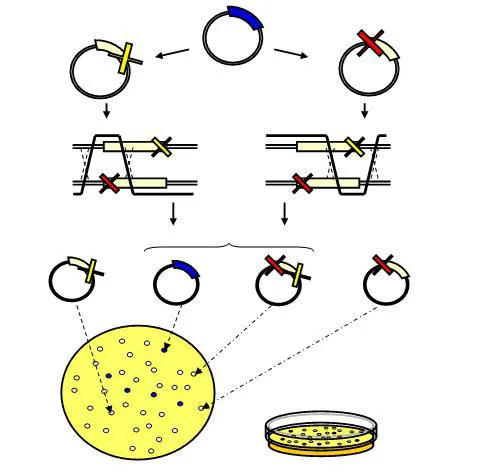
Figure 1: Schematic Representation of Homologous Recombination Assay
The lacZα coding region of the positive control plasmid is mutated to generate two specific plasmids (dl-1 and dl-2) with distinct mutations. These two defective plasmids can form a functional lacZα cassette through intermolecular homologous recombination. When transformed into bacterial cells, defective plasmids form white colonies, while plasmids that have successfully undergone homologous recombination to generate functional lacZα form blue colonies. Efficiency can be determined quantitatively via qPCR using the supplied primer mixtures, or qualitatively by calculating the percentage of blue colonies in a traditional blue/white screening assay.

Figure 2: Real-time PCR Amplification of Plasmid DNA Isolated from HEK 293 Cells.
After transfection with the supplied plasmids genomic DNA was isolated from each well of a 6-well plate using Norgen’s RNA/DNA/Protein Purification Kit. Fifty nanograms of the positive control plasmid was transfected into each well of the HEK 293 cells, and the total DNA was isolated 12 h later. For the recombinant samples, 25 ng of dl-1 plus 25 ng of dl-2 were transfected and then isolated. For the negative controls, 50 ng of dl-1 or 50 ng of dl-2 were transfected and then isolated. The experiment was carried out in duplicate to avoid the reading error of the PCR machine.
Specifications
- Kit Capacity: 200 transformations or 24 transfections
- dl-1 Plasmid: 12 μg (50 ng/μL)
- dl-2 Plasmid: 12 μg (50 ng/μL)
- Positive Control Plasmid: 5 μg (50 ng/μL)
- Assays Primers Mixture: 400 μL
- Universal Primers Mixture: 400 μL
- Storage Conditions: All components should be tightly sealed and stored at -20°C or lower.
- Shelf Life: Stable for 5 years after the date of shipment.
- Intended Use: For research use only; not intended for in vitro diagnostics.