

Bambanker™ Cell Freezing Media: Serum-Free Cryopreservation Straight to -80°C
Bambanker™ is a ready-to-use, serum-free cell freezing medium for the long-term cryopreservation of mammalian cells. It replaces the home-made mix of fetal bovine serum, DMSO and culture medium that many labs still prepare by hand, along with the controlled-rate freezer or cooling container that usually goes with it. You pellet the cells, resuspend them in Bambanker™ and put the vials straight into a -80°C freezer. The result is a faster, more consistent freezing step with high post-thaw recovery, including for cell types that do poorly in conventional media.
The medium has a defined, constant composition with 10% DMSO as the cryoprotectant and no serum, antibiotics or antifungals, so lot-to-lot variation from serum is taken out of your banking workflow. It protects cells through unregulated cooling in a standard -80°C freezer, and frozen vials can stay at -80°C or move to liquid nitrogen (-196°C) for archival storage. Bambanker™ is manufactured by GC Lymphotec in GMP-compliant facilities and has been cited in published work on 125 different cell and sample types. Nippon Genetics reports that the JCRB Cell Bank, which holds over 1,400 cell lines, has used it since 2014.
Key Benefits:
- Simplified Workflow: No controlled-rate freezing. Resuspend the pellet and place vials directly at -80°C. There is no programmable freezer or cooling container to set up.
- Consistent Results: Serum-free and defined. Removing FBS takes out a major source of batch-to-batch variability and contamination risk in cell banking.
- High Recovery: Built for sensitive cells. The manufacturer reports viability and recovery above 90%, with clear gains over regular media for cells that are hard to freeze.
- Broad Compatibility: 125 published cell and sample types. Covers cell lines, primary immune cells, stem cells, patient biopsies, organoids and tissue pieces.
- Ready to Use: No preparation. Supplied as a complete solution that can be used straight from the fridge, with no mixing, dilution or warming.
Choosing the Right Bambanker™
Every Bambanker™ medium is ready to use, free of fetal bovine serum and antibiotics, and freezes cells directly at -80°C. They differ in what they are built to protect.
| Catalogue No. | Product | Best for | Formulation | Freezing workflow | Pack sizes |
|---|---|---|---|---|---|
| K1-0666 K1-0664 K1-0662 K1-0661 |
 Bambanker™ (Standard) Bambanker™ (Standard)You are here |
Routine and primary cell lines, tissue pieces, organoids and spheroids | Serum-free, 10% DMSO | Pellet, resuspend, freeze at -80°C | 10 mL, 20 mL, 5 × 20 mL, 100 mL |
| K1-0668 |  Bambanker™ Direct Bambanker™ DirectView Product |
Hybridomas, fragile suspension cells, high-throughput clone banking | FBS-free (contains bovine serum-derived components) | Add 1:1 to cells in medium, freeze at -80°C. No centrifugation | 20 mL |
| K1-0676 | 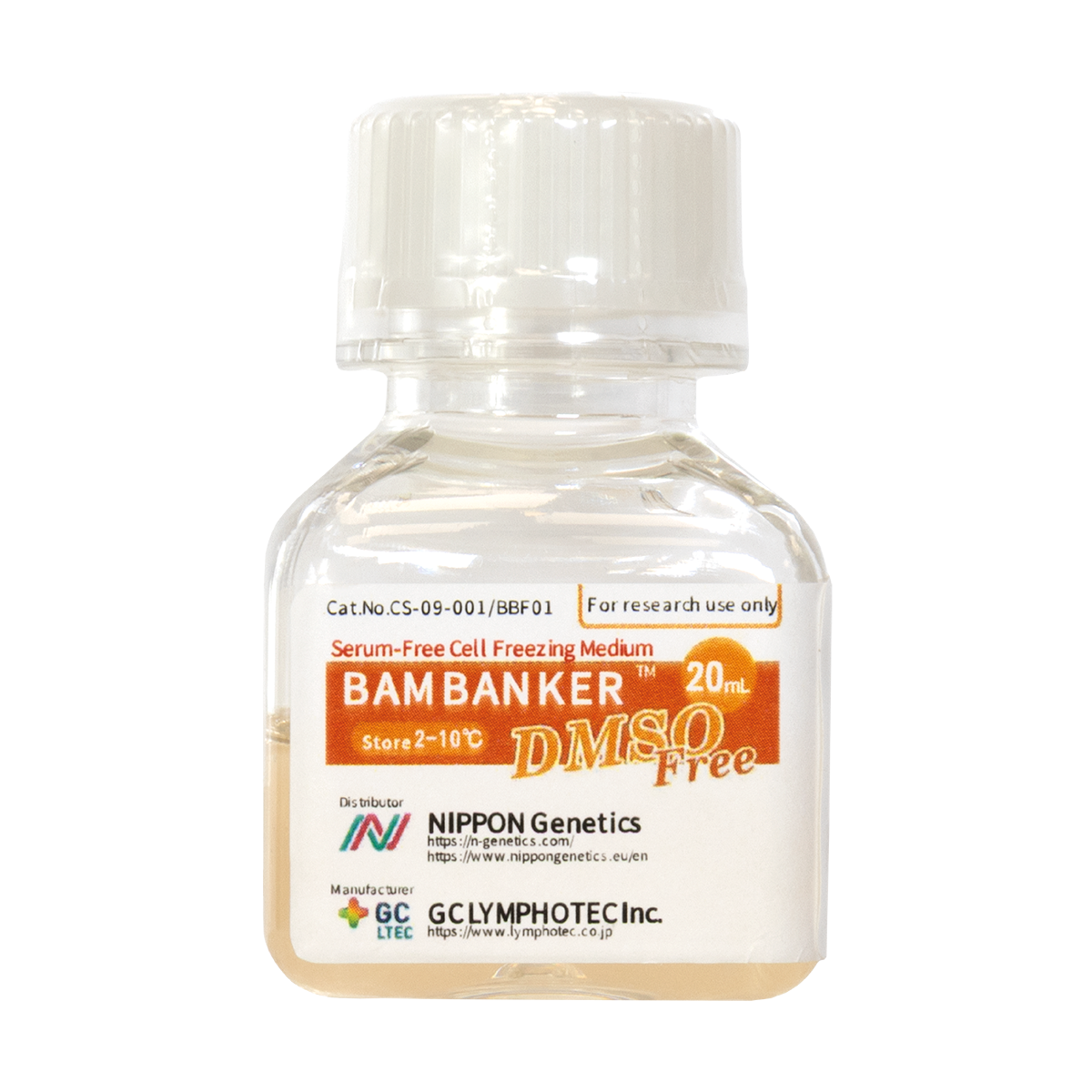 Bambanker™ DMSO Free Bambanker™ DMSO FreeView Product |
Cells that are damaged or differentiated by DMSO | Serum-free, DMSO-free | Pellet, resuspend, freeze at -80°C | 20 mL |
| K1-0672 K1-0673 |
 Bambanker™ hRM Bambanker™ hRMView Product |
Human and primate ES and iPS cells | Serum-free, xeno-free, human serum albumin, 10% DMSO | Pellet, resuspend, freeze at -80°C | 20 mL, 100 mL |
Bambanker™ Compared with a Home-Made Freezing Mix
| Typical FBS/DMSO mix | Bambanker™ | |
|---|---|---|
| Preparation | Made up in the lab from serum, DMSO and medium | Ready to use from the bottle |
| Serum | Usually 10–90% FBS, which varies from lot to lot | Serum-free, defined composition |
| Cooling | Controlled-rate freezer or cooling container | Directly into a -80°C freezer |
| Storage of frozen cells | Usually moved to liquid nitrogen within days | -80°C or liquid nitrogen |
| Traceability | Depends on in-house records for each component | Single lot number, GMP-compliant manufacture |
Technical Insights
Simple Freezing and Thawing Protocol
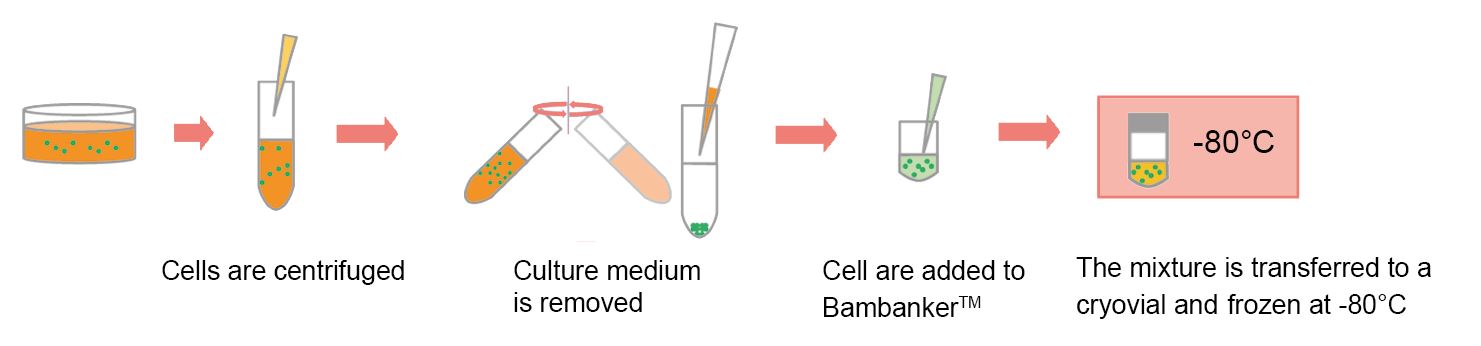
The Bambanker™ workflow: harvest, aspirate the medium, resuspend in Bambanker™, transfer to a cryovial and store at -80°C.
Freezing
- Harvest: Centrifuge cells in logarithmic growth phase and collect 5 × 10⁵ to 1 × 10⁷ cells.
- Resuspend: Remove the supernatant and resuspend the pellet in 1 mL of medium, used straight from the fridge.
- Aliquot: Transfer the suspension to a cryovial.
- Freeze: Place the vial directly at -80°C. No step-wise or programmed freezing is needed. Transfer to liquid nitrogen afterwards if your banking policy requires it.
Thawing
- Thaw quickly: Warm the vial in a 37°C water bath until just thawed.
- Dilute: Add the 1 mL cell suspension to 10 mL of fresh culture medium and mix well.
- Wash: Centrifuge at 300–400 × g for 3 minutes and remove the supernatant.
- Culture: Resuspend in fresh medium and seed, or move straight to your downstream work.
No Unwanted Differentiation in Pluripotent Stem Cells
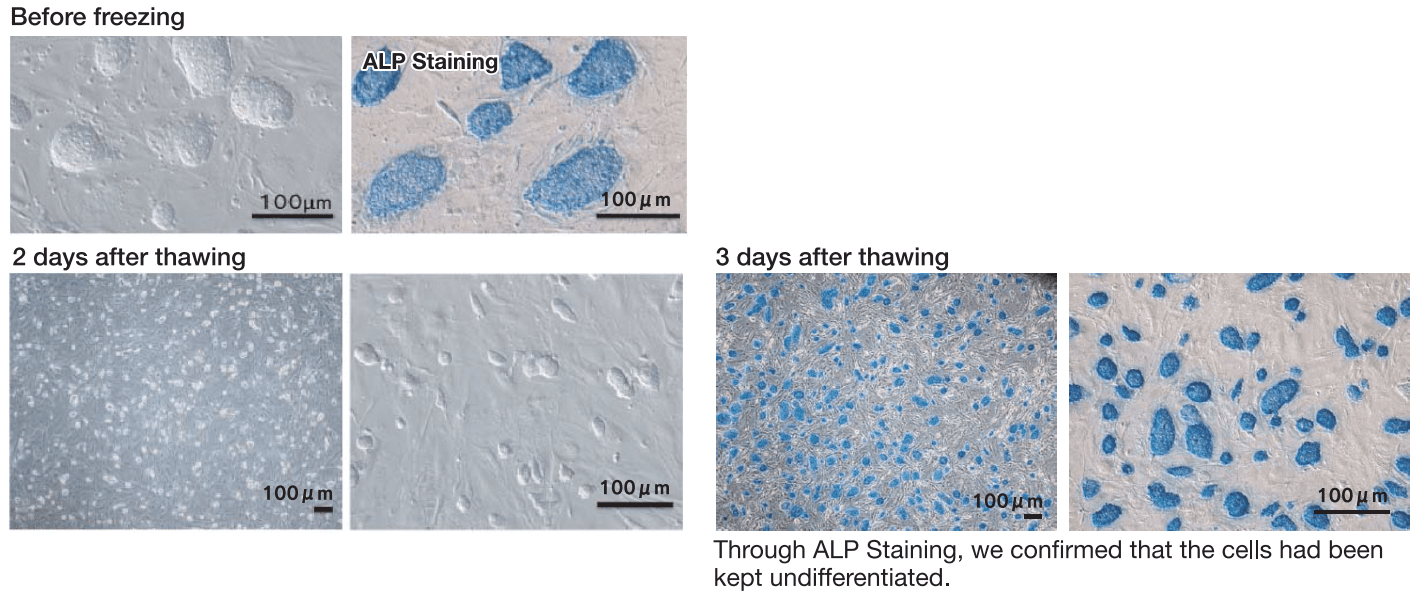
Figure 1: Alkaline phosphatase (ALP) staining of mouse ES cells after freezing and thawing in Bambanker™. Strong staining shows the cells remained undifferentiated.
Pluripotent stem cells are some of the hardest cells to freeze well, because poor handling can push them out of the undifferentiated state. Mouse ES cells frozen in Bambanker™ kept their ALP-positive, undifferentiated phenotype after thawing, with no abnormalities in cell condition. For human ES and iPS cells, see Bambanker™ hRM in the table above.
Independent Validation by the JCRB Cell Bank
The JCRB Cell Bank in Japan compared Bambanker™ with another commercial cryopreservation medium using four cell lines known for poor survival after thawing: KHYG-1, KAI3, HL60 and OVMANA. In each case, 1 × 10⁶ cells were frozen in 1 mL of medium, stored for two weeks at -80°C, thawed in a 37°C water bath, seeded in 96-well plates and counted daily. Cells frozen in Bambanker™ proliferated better after thawing in both suspension and adherent lines. On the strength of these results the bank switched its stocks to Bambanker™, and Nippon Genetics reports it has used the medium since 2014 across more than 1,400 cell lines.
Suspension Cell Recovery
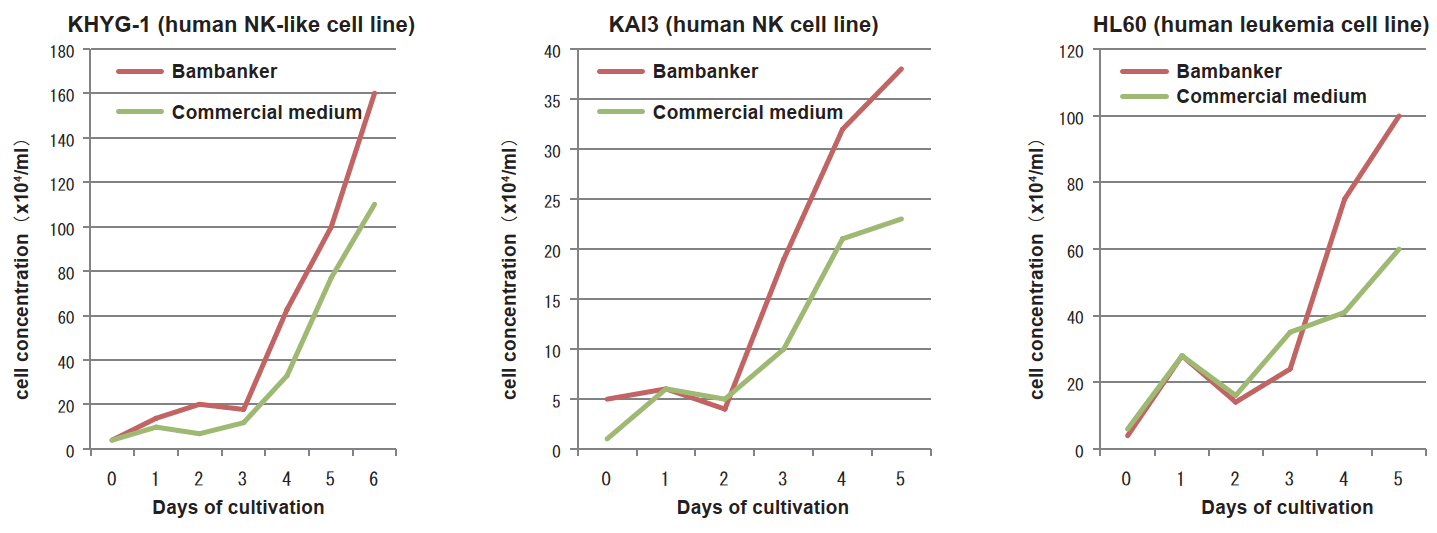
Figure 2: Growth after thawing of three suspension lines: KHYG-1 (human NK-like), KAI3 (human NK) and HL60 (human leukaemia), frozen in Bambanker™ or a competitor medium.
Adherent Cell Recovery
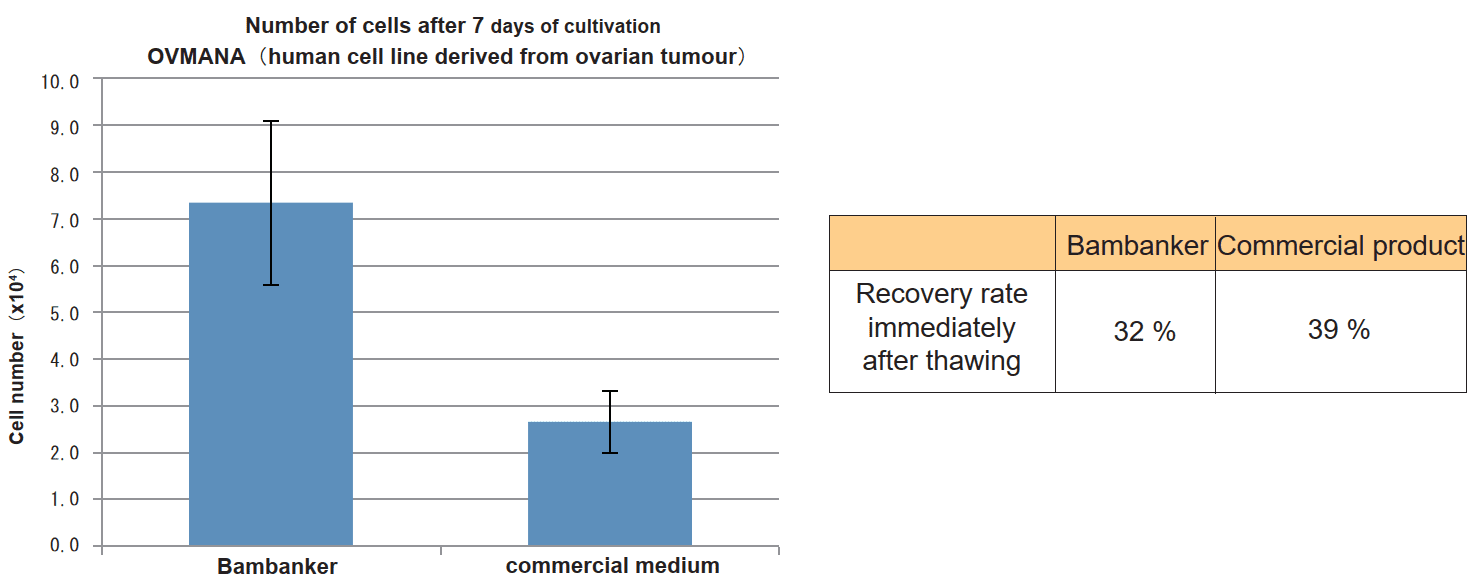
Figure 3: Cell numbers after 7 days in culture for OVMANA, a human ovarian tumour line, frozen in Bambanker™ or a competitor medium.
Proven Across Cell Lines, Primary Cells, Tissue and Organoids
Bambanker™ has been named as the freezing medium in peer-reviewed studies covering 125 cell and sample types, from routine lines such as HEK293T, CHO-K1 and HeLa to CAR T cells, CD34+ haematopoietic stem cells, human iPSCs, patient tumour biopsies and prostate organoids. The full list is below, with a link to a representative paper for each.
▼ Table 1: Cell and sample types cryopreserved with Bambanker™ in published studies (125 entries)
| Cell or sample type | Species | Publication DOI |
|---|---|---|
| Immune and haematopoietic cells | ||
| Bone marrow mononuclear cells (MNCs) | Yorkshire minipig | 10.1111/j.1540-8191.2010.01086.x |
| CAR T cells | Human | 10.1038/s41586-025-09507-9 |
| CD3+ T cells | Human | 10.1007/s00262-012-1375-5 |
| CD34+ haematopoietic stem cells | Human | 10.1016/j.omtm.2017.11.008 |
| CD4+ T cells | Human | 10.1016/j.immuni.2024.11.004 |
| CD8+ T cells | Human | 10.1038/s41586-024-07300-8 |
| Haematopoietic progenitor cells (HPCs) | Human | 10.1186/s13024-018-0297-x |
| Jurkat | Human | 10.1038/s41586-025-09433-w |
| Leukocytes | Human | 10.3390/cells10040843 |
| Lung interstitial macrophages | Mouse | 10.3390/biomedicines9091241 |
| Lymphoblastoid cell lines (LCLs) | Human | 10.1371/journal.pone.0174317 |
| RAW 264.7 macrophage cell line | Mouse | 10.1093/jac/dks056 |
| Naïve CD4+ T cells | Human | 10.1093/cei/uxab012 |
| Naïve CD8+ T cells | Human | 10.1093/cei/uxab012 |
| Peripheral blood mononuclear cells (PBMCs) | Human | 10.3892/ol.2023.13967 |
| Spleen cells | Human | 10.1016/j.cell.2019.09.035 |
| Splenocytes | Mouse | 10.1016/j.cell.2019.09.035 |
| Tonsillar cells | Human | 10.1093/ndt/gfr403 |
| Type 2 conventional dendritic cells (cDC2s) | Human | 10.1016/j.cell.2019.09.035 |
| U-937 | Human | 10.1007/s00418-025-02368-3 |
| Uterine tissue-resident macrophages | Mouse | 10.3390/biomedicines11030985 |
| Stem, progenitor and differentiated cells | ||
| Adipose-derived stem cells (ASCs) | Human | 10.1038/nprot.2010.199 |
| Airway basal stem cells (ABSCs) | Human | 10.1186/s12931-025-03302-w |
| Bone marrow-derived endothelial progenitor cells (EPCs) | Yorkshire minipig | 10.1016/j.athoracsur.2007.12.006 |
| Bone marrow-derived mesenchymal stem cells (BM-MSCs) | Horse | 10.1186/scrt483 |
| Embryonic stem cells (ESCs) | Human | 10.1016/j.stemcr.2023.01.007 |
| Gingiva-derived mesenchymal stem cells (GMSCs) | Human | 10.3390/bioengineering5010008 |
| Hepatoblast-like cells (HBCs) | Human | 10.1002/hep4.1111 |
| hiPSC-derived cardiomyocytes | Human | 10.1152/physiolgenomics.00021.2020 |
| hiPSC-derived microglia progenitors (MG01) | Human | 10.1038/s41467-024-52400-8 |
| iPSC-derived motor neurons | Human | 10.1016/j.nbd.2024.106673 |
| Induced pluripotent stem cells (iPSCs) | Human | 10.1016/j.xpro.2023.102073 |
| Induced pluripotent stem cells (iPSCs) | Mouse | 10.1247/csf.11008 |
| iPSC-derived neural progenitor cells (NPCs) | Human | 10.21769/BioProtoc.3939 |
| Mesenchymal stem cells (MSCs) | Human | 10.1371/journal.pone.0282473 |
| Neural stem cells (NSCs) | Human | 10.1186/s12987-023-00471-y |
| Epithelial cells | ||
| Bronchial epithelial cells (BECs) | Human | 10.1371/journal.pone.0306197 |
| CHO-K1 | Chinese hamster | 10.3389/fphar.2019.00851 |
| Large airway epithelial (LAE) cells | Human | 10.1016/j.celrep.2024.114076 |
| MCF10A | Human | 10.1007/s00418-025-02368-3 |
| MCF10AT1 | Human | 10.1007/s00418-025-02368-3 |
| Medullary thymic epithelial cells | Mouse | 10.1084/jem.20240817 |
| Nasal epithelial cells (HNECs) | Human | 10.1371/journal.pone.0306197 |
| RPE1 retinal pigment epithelial cells | Human | 10.1038/s41586-025-09433-w |
| RWPE-1 | Human | 10.1007/s00418-025-02368-3 |
| Small airway epithelial (SAE) cells | Human | 10.1016/j.celrep.2024.114076 |
| Uterine epithelial cells (pbUECs) | Bovine | 10.1111/j.1439-0531.2011.01792.x |
| Fibroblasts and stromal cells | ||
| BJ dermal fibroblasts | Human | 10.1016/j.isci.2024.109708 |
| HFF-1 dermal fibroblasts | Human | 10.1016/j.isci.2024.109708 |
| Embryonic fibroblasts | Dog | 10.1016/j.theriogenology.2005.12.015 |
| Embryonic fibroblasts (MEFs) | Mouse | 10.1016/j.theriogenology.2005.12.015 |
| Fibroblasts | Pig | 10.1111/j.1399-3089.2006.00365.x |
| Gastric cancer-associated fibroblasts (CAFs) | Human | 10.1016/j.xpro.2021.100553 |
| Lung fibroblasts | Human | 10.1002/adfm.202515610 |
| Oral fibroblasts | Human | 10.1016/j.bbrep.2021.101169 |
| Periodontal ligament fibroblasts (PDLFs) | Human | 10.1002/cre2.533 |
| Stromal cells of brain | Mouse | 10.1186/s12865-019-0314-z |
| Stromal cells of liver | Mouse | 10.1186/s12865-019-0314-z |
| Stromal cells of lung | Mouse | 10.1186/s12865-019-0314-z |
| Stromal cells of spleen | Mouse | 10.1186/s12865-019-0314-z |
| Stromal vascular fraction (SVF) | Human | 10.1002/jbm.a.37430 |
| Cancer cell lines | ||
| A549 alveolar basal epithelial adenocarcinoma | Human | 10.1038/s41586-025-09433-w |
| DLD1 colon cancer | Human | 10.1016/j.ymeth.2019.04.010 |
| HCT116 colon cancer | Human | 10.1016/j.ymeth.2019.04.010 |
| Gastric tumour cells | Human | 10.1038/s41467-024-52615-9 |
| HCC4006 | Human | 10.1038/s41586-025-09433-w |
| HeLa | Human | 10.1007/s00418-025-02368-3 |
| HEK293T | Human | 10.1016/j.cmet.2021.11.001 |
| KGN | Human | 10.1158/0008-5472.CAN-24-2341 |
| HepG2 liver cancer | Human | 10.18433/J3VK5G |
| LNCaP | Human | 10.1007/s00418-025-02368-3 |
| MCF7 | Human | 10.1007/s00418-025-02368-3 |
| MDA-MB-231 | Human | 10.1007/s00418-025-02368-3 |
| MDA-MB-468 | Human | 10.1007/s00418-025-02368-3 |
| NCI-H1048 | Human | 10.1038/s41586-025-09433-w |
| NCI-H1299 | Human | 10.1038/s41586-025-09433-w |
| NCI-H358 | Human | 10.1016/j.xcrm.2025.102317 |
| NCI-H446 | Human | 10.1038/s41586-025-09433-w |
| NCI-H526 | Human | 10.1038/s41586-025-09433-w |
| NCI-H69 | Human | 10.1038/s41586-025-09433-w |
| NCI-H82 | Human | 10.1038/s41586-025-09433-w |
| SKOV-3 ovarian cancer | Human | 10.3389/fphar.2019.00851 |
| PC3 (Chung) | Human | 10.1007/s00418-025-02368-3 |
| PC3 (Guise) | Human | 10.1007/s00418-025-02368-3 |
| T47D | Human | 10.1007/s00418-025-02368-3 |
| U-2 OS | Human | 10.1007/s00418-025-02368-3 |
| Patient-derived samples | ||
| Ascites-derived HGSC patient-derived xenograft | Human | 10.1186/s13046-022-02570-4 |
| Breast cancer tissue biopsies | Human | 10.1038/s42003-022-04025-0 |
| Gastric cancer biopsies | Human | 10.1038/s41598-022-12610-w |
| Glioma tissue cells | Human | 10.1038/s41467-025-58452-8 |
| Medulloblastoma tumour tissue | Human | 10.1038/s41467-025-56268-0 |
| Ovarian cancer models (OCMs) | Human | 10.1186/s13073-021-00952-5 |
| Ovarian metastasis cells | Human | 10.1038/s41467-024-52615-9 |
| Ovarian single cells | Human | 10.1038/s41467-019-11036-9 |
| Pancreatic ductal adenocarcinoma cells | Human | 10.1016/j.celrep.2019.01.048 |
| Peritoneal metastasis cells | Human | 10.1038/s41467-024-52615-9 |
| Breast tumour biopsies | Human | 10.1016/j.xpro.2022.101712 |
| Colorectal tumour biopsies | Human | 10.1016/j.xpro.2022.101712 |
| Gastric tumour biopsies | Human | 10.1016/j.xpro.2022.101712 |
| Pancreatic tumour biopsies | Human | 10.1016/j.xpro.2022.101712 |
| Organoids and spheroids | ||
| Glioblastoma stem-like cell (GSC) neurospheres | Human | 10.62347/GRSP1268 |
| Prostate organoids | Human | 10.1038/s41467-021-26901-9 |
| Intestinal tumour-derived organoids | Mouse | 10.1007/978-1-0716-4023-4_6 |
| NEPC patient-derived organoids | Human | 10.1002/1878-0261.12662 |
| S1 fraction tumour-dependent spheroids | Human | 10.1016/j.xpro.2025.104286 |
| Other cells and tissues | ||
| Adrenal cells | Human | 10.1210/clinem/dgac394 |
| Atheroma-derived single cells | Human | 10.1093/cvr/cvaf014 |
| Bronchoalveolar lavage (BAL) fluid | Human | 10.1164/rccm.202310-1831LE |
| C2C12 skeletal myoblasts | Mouse | 10.1371/journal.pone.0280527 |
| Calvarial osteoblasts | Mouse | 10.1073/pnas.0709650104 |
| Dental pulp-derived cells (pDPCs) | Pig | 10.1111/j.1432-0436.2008.00282.x |
| Fetal astrocytes | Human | 10.1007/s44192-023-00050-5 |
| Fetal gonads | Human | 10.3390/cells10051214 |
| Flp-In T-REx 293 cells | Human | 10.1016/j.cmet.2021.11.001 |
| Hepatocytes | Mouse | 10.1016/j.cell.2018.11.012 |
| Hippocampal tissue | Mouse | 10.1016/j.neuint.2020.104933 |
| Hu5/KD3 myoblasts | Human | 10.1186/s13287-024-03922-x |
| Mitochondrial cardiomyopathy heart tissue | Human | 10.1126/sciadv.adq1575 |
| Mural granulosa cells (mGCs) | Human | 10.1016/j.rbmo.2025.104833 |
| Myometrial cells | Human | 10.1371/journal.pone.0338485 |
| Nuclei | Human | 10.1038/s41588-025-02188-0 |
| Temporomandibular joint disc-derived cells | Rat | 10.1016/j.jobcr.2025.03.018 |
| Testicular interstitial cells | Mouse | 10.3390/biomedicines10020487 |
| Brain tumour cells | Mouse | 10.1016/j.xpro.2023.102049 |
| Spleen tumour cells | Mouse | 10.1016/j.xpro.2023.102049 |
Source: Nippon Genetics Europe Application Note 01.2026, covering literature published up to December 2025. One representative publication is listed per cell or sample type, and only papers that name Bambanker™ as the cryopreservation medium are included.
Bambanker™ Frequently Asked Questions
1. What is Bambanker™?
Bambanker™ is a ready-to-use, serum-free cryopreservation medium for mammalian cells, including cell lines, primary cells and stem cells. Cells are resuspended in it and frozen directly at -80°C, with no programmable freezer required.
2. How is it different from making my own freezing medium?
A home-made mix usually relies on FBS, which varies between lots, and needs a controlled cooling rate. Bambanker™ has a defined, serum-free composition, comes ready to use and freezes cells reliably in an ordinary -80°C freezer.
3. Which Bambanker™ should I use?
Standard Bambanker™ suits most cell lines, primary cells, tissue and organoids. Choose Bambanker™ Direct for hybridomas and workflows where you want to avoid centrifugation, Bambanker™ DMSO Free for cells harmed by DMSO, and Bambanker™ hRM for human ES and iPS cells where a xeno-free medium is needed. The comparison table above sets out the differences.
4. What is the freezing and thawing protocol?
Centrifuge cells in logarithmic growth phase, resuspend 5 × 10⁵ to 1 × 10⁷ cells in 1 mL Bambanker™, transfer to a cryovial and freeze at -80°C. To thaw, warm quickly at 37°C, add the suspension to 10 mL of culture medium, centrifuge at 300–400 × g for 3 minutes, remove the supernatant and resuspend in fresh medium.
5. How many cells should I freeze per vial?
The manufacturer recommends 1 × 10⁶ cells per 1 mL as a starting point, within a working range of 5 × 10⁵ to 1 × 10⁷ cells/mL. Avoid going much above this range.
6. Can I freeze smaller volumes?
Yes. Scale cell number and volume together, for example 5 × 10⁵ cells in 0.5 mL, and check recovery for your cell type.
7. Can I keep cells at -80°C long term, or should they go into liquid nitrogen?
Bambanker™ is designed for long-term storage at -80°C and is equally suited to liquid nitrogen (-196°C). The manufacturer does not publish a maximum storage time at -80°C, so for master banks or irreplaceable stocks many labs still transfer vials to liquid nitrogen.
8. Can I freeze tissue pieces or organoids?
Yes. Reduce tissue to small pieces, ideally under 20 mg. A 10-minute pre-incubation in Bambanker™ at 4°C before freezing can help the medium penetrate. Organoids and spheroids appear in the published cell type table above.
9. Does it contain serum or DMSO?
Standard Bambanker™ is free of fetal bovine serum, antibiotics and antifungals, and contains 10% DMSO as the cryoprotectant. If your cells are sensitive to DMSO, use Bambanker™ DMSO Free.
10. Can I use frozen cells for RNA work, or freeze virus-infected cells?
Yes to both. Cells for RNA isolation can be frozen in Bambanker™, though 1 × 10⁶ cells may give a low total RNA yield. Virus-infected cells can be frozen as long as they are still viable.
11. How should I store the medium?
Store the bottle at 2–10°C, protected from light. It can be used straight from the fridge without warming. Shelf life is 2 years from the date of manufacture.
12. What should I check after thawing?
Check viability straight away, then follow doubling time and morphology over the first few passages and confirm any markers or assays your work depends on. Recording the medium lot number alongside recovery data keeps your bank traceable.
13. Is Bambanker™ made to GMP?
Bambanker™ is manufactured in GMP-compliant facilities under a quality management system. For research use only. Not for use in humans or for diagnostic or therapeutic procedures.
Specifications
- Product type: Serum-free cell freezing medium (cryopreservation medium)
- Formulation: Ready to use. Contains 10% DMSO. Free of fetal bovine serum, antibiotics and antifungals. Defined, constant composition
- Suitable for: Mammalian cell lines, primary cells, stem cells, tissue pieces, organoids and spheroids
- Recommended cell density: 1 × 10⁶ cells/mL (range 5 × 10⁵ to 1 × 10⁷ cells/mL)
- Freezing: Directly at -80°C, with no programmed or step-wise freezing
- Storage of frozen cells: -80°C or liquid nitrogen (-196°C)
- Storage of medium: 2–10°C, protected from light
- Shelf life: 2 years from date of manufacture
- Pack sizes: 10 mL (K1-0666), 20 mL (K1-0664), 5 × 20 mL (K1-0662), 100 mL (K1-0661)
- Quality: Manufactured by GC Lymphotec in GMP-compliant facilities. Supplied through Nippon Genetics
- Intended use: For research use only. Not for use in humans or for diagnostic or therapeutic procedures.