

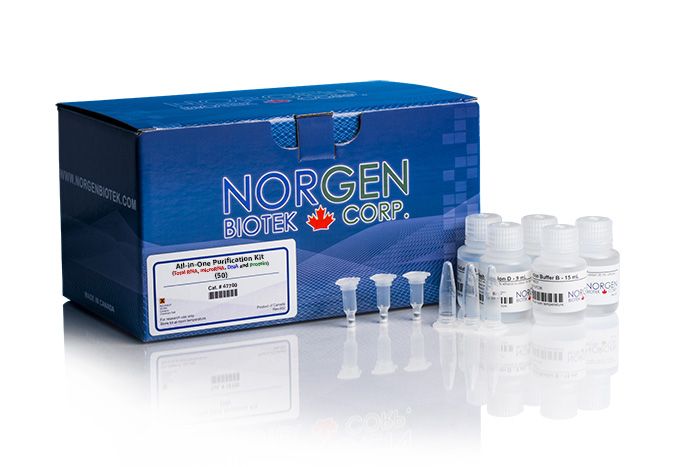
RNA/DNA Purification Micro Kit: Maximising Data from Precious Single Samples
The RNA/DNA Purification Micro Kit offers a rapid and reliable method for the sequential isolation of total RNA and genomic DNA from a single biological source. Specifically engineered for researchers working with limited or high-value materials—such as clinical biopsy samples, single foci from cell cultures, or small bacterial pellets—this kit eliminates the requirement for sample fractionation. By ensuring that both nucleic acid types are derived from the exact same starting population, the kit removes the biological variance often introduced when splitting samples, providing a more accurate correlation between the genome and transcriptome.
The purification mechanism utilises advanced spin-column chromatography with a dual-column system. The sample lysate is first passed through a dedicated DNA-binding column to capture genomic DNA, after which the flow-through is applied to a second column optimised for total RNA. This proprietary resin technology ensures the efficient capture of all RNA species, including microRNA (miRNA), without the need for phenol-chloroform extraction or inconvenient alcohol precipitation. Both the DNA and RNA are eluted in volumes as low as 20 µL, resulting in high-concentration, high-purity samples ready for sensitive downstream analysis.
Key Benefits:
- Sequential Isolation: Optimised workflow for single samples. Isolate both genomic DNA and total RNA from the same input without splitting the sample, preserving precious material and ensuring data consistency.
- High-Purity Elution: Concentrated results for sensitive assays. Elute DNA and RNA in as little as 20 µL, providing the high concentrations required for microRNA profiling, qPCR, and NGS.
- Comprehensive RNA Capture: Includes small RNA species. The kit efficiently recovers all RNA sizes, including microRNA (miRNA), for a complete transcriptomic overview.
- Reduced Biological Variance: Enhanced data reliability. By extracting both nucleic acids from the same lysate, researchers eliminate inconsistent results caused by sample heterogeneity.
- Versatile Sample Compatibility: Broad biological application. Validated for use with animal cells (up to 500,000), tissues, blood, bacteria, yeast, and fungi.
Technical Insights
The sequential purification process relies on differential binding affinities within the two-column system. The first column specifically captures genomic DNA while allowing the RNA to remain in the flow-through. The RNA is then chemically adjusted to promote binding to the second micro-spin column. This method ensures that the RNA is not contaminated by genomic DNA and vice versa, maintaining the highest integrity for both macromolecules. Because the process is rapid and avoids harsh chemicals, the resulting nucleic acids are of the highest purity for molecular characterisation.
Specifications
- Catalogue Number: P4-0235
- Sample Type: Animal cells, tissues, blood, bacteria, yeast, fungi.
- Maximum Sample Input: Up to 5 x 10⁵ cultured cells.
- Elution Volume: 20 µL – 50 µL.
- RNA Integrity: Total RNA including microRNA (miRNA).
- Processing Time: Rapid sequential purification (approx. 30 minutes).